
A freshly restored roof can look impressive from the street, but colour alone does not tell you whether the work underneath was thorough. A quality roof restoration is the result of inspection, repairs, cleaning, preparation and a compatible coating system working together. Using genuine customer-submitted photos from the Roof Makeover Specialist ProductReview listing, this guide explains the visible details worth examining and the important work that a finished photograph cannot prove on its own.
What these real customer roof photos show
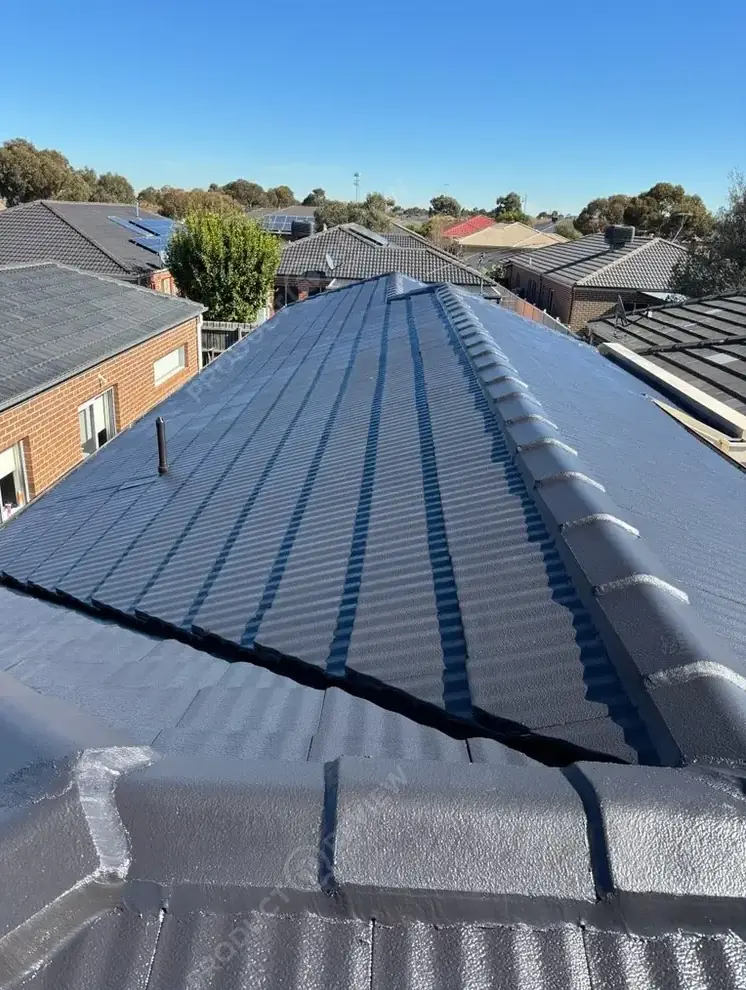
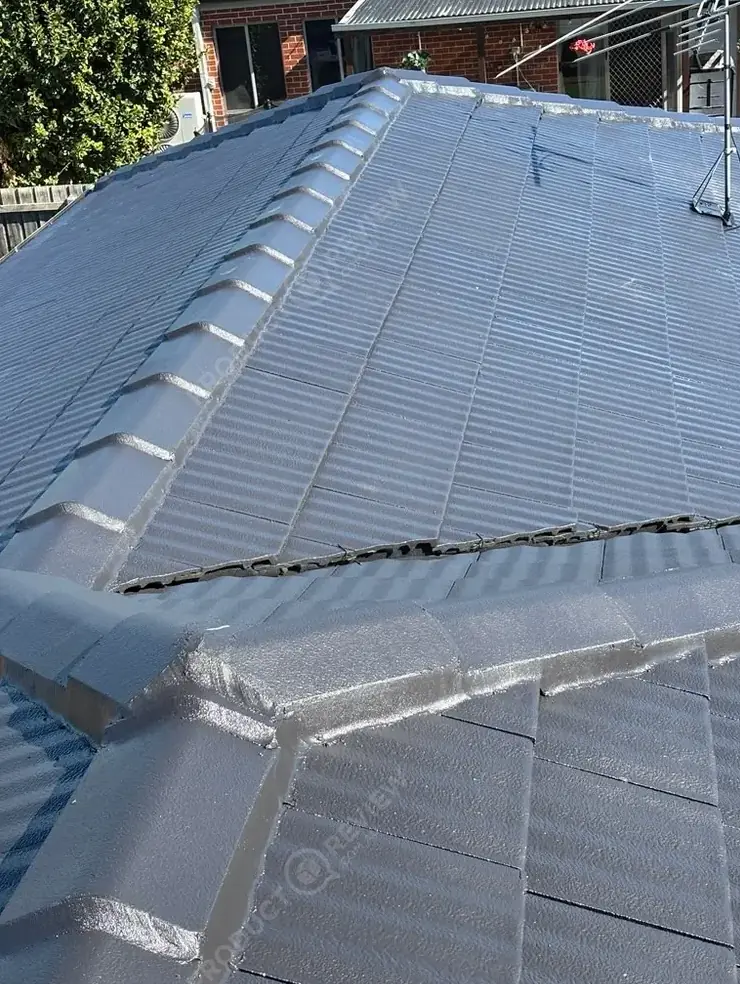
The images throughout this guide were submitted by a customer and published on the Roof Makeover Specialist ProductReview listing. They show a completed charcoal-grey tiled roof from several angles, including the broad roof planes, ridge lines, hips and changes in roof shape. We have retained the ProductReview watermark so the source remains clear.
These photographs are useful because they are not staged catalogue renders. They show how a restored roof presents in strong Melbourne daylight and how a consistent finish reads across a real suburban home. The even colour, orderly tile rows and neatly finished ridge lines are all details homeowners can look for when viewing completed work.
However, photographs have limits. They cannot confirm every repair, the condition beneath each tile, the products used, the number of coats applied or whether every drainage detail was addressed. That is why the finished appearance should be considered alongside the written scope, product information and final inspection—not used as the only measure of quality.
- ✓Consistent colour across the main roof planes
- ✓Clearly defined tile profiles rather than heavy product build-up
- ✓Neat ridge and hip lines
- ✓Orderly transitions where roof sections meet
- ✓A finish that appears uniform in direct natural light
1. A professional result begins before the coating
The most important stages of a roof restoration happen before the final colour becomes visible. An existing roof first needs to be assessed to determine whether restoration is appropriate. Broken or displaced tiles, deteriorated ridge bedding, failed pointing, damaged flashings and drainage issues should be identified before the surface is prepared for coating.
A responsible roof restoration in Melbourne is therefore more than pressure cleaning followed by paint. The work should follow a roof-specific scope. If repairs are skipped or a failing roof is simply coated, the new colour may improve the appearance temporarily without resolving the reasons the roof needed attention. Start with the nine signs a roof may need a full restoration, then use our step-by-step roof restoration process guide to see how the stages should connect from inspection through to handover.
Homeowners should receive a clear explanation of what is included before work begins. The quote should distinguish inspection, repairs, cleaning, preparation, primer or sealer requirements and the finishing system. This makes it easier to compare two proposals on workmanship and scope instead of comparing price alone.
- ✓Inspect the accessible roof areas and identify visible defects
- ✓Replace broken or unsuitable tiles where required
- ✓Address agreed ridge, hip, valley and flashing repairs
- ✓Clean the surface thoroughly and allow it to dry appropriately
- ✓Use products compatible with the roofing material and existing condition
2. Look for consistency across the field tiles
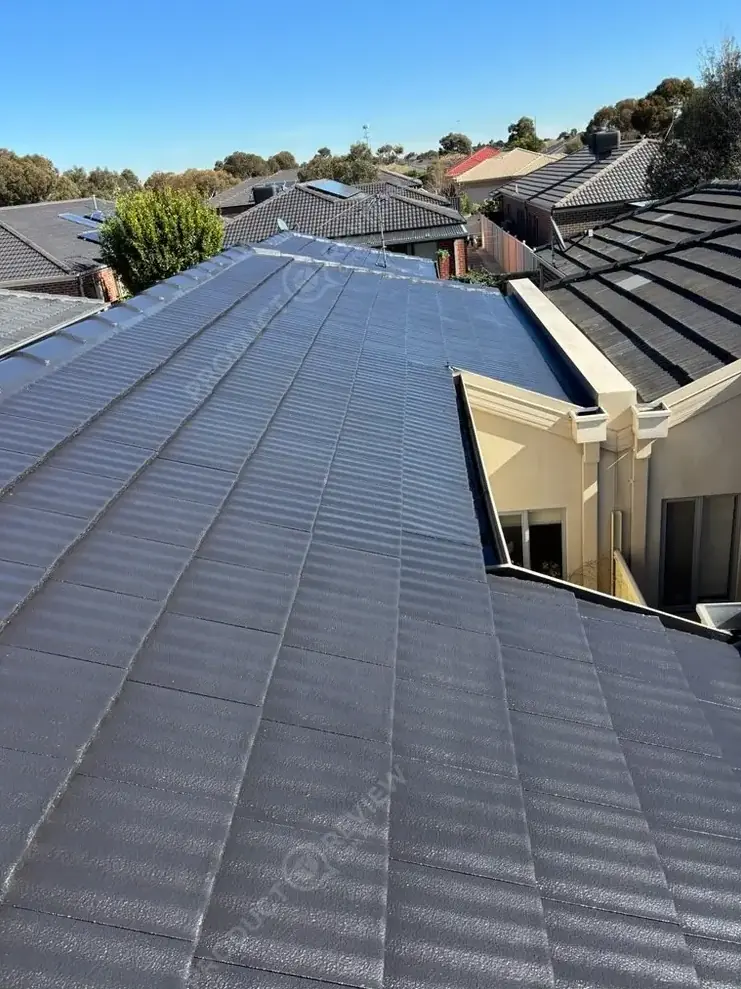
The broad sections of tiles between the ridges, hips and gutters are often called the field of the roof. In a strong finished result, colour should appear consistent across these areas without obvious thin patches, missed edges or random changes in sheen. Direct sunlight is particularly revealing because it can expose uneven coverage that is less noticeable on an overcast day.
Consistency does not mean the roof should look like a flat sheet. The original tile profile should remain visually defined. Excessive product build-up can soften edges, bridge drainage channels or create a heavy appearance. A well-applied coating follows the tile shape while presenting an even protective finish.
The customer photographs show long, repeated rows that remain visually distinct after coating. That is the kind of detail worth inspecting from several safe ground-level viewpoints once the project is complete.
3. Ridge capping and hips deserve close attention
Ridge capping covers the highest horizontal junctions of a tiled roof, while hip capping follows the sloping external junctions. These areas are highly visible, but they also perform an important weather-protection role. Cracked or deteriorated bedding and pointing should be assessed and repaired where included in the scope before the final coating is applied.
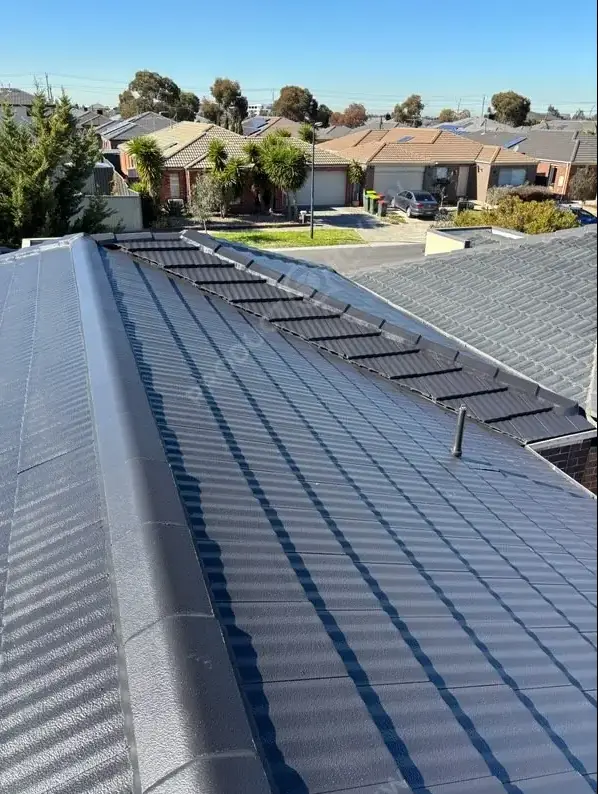
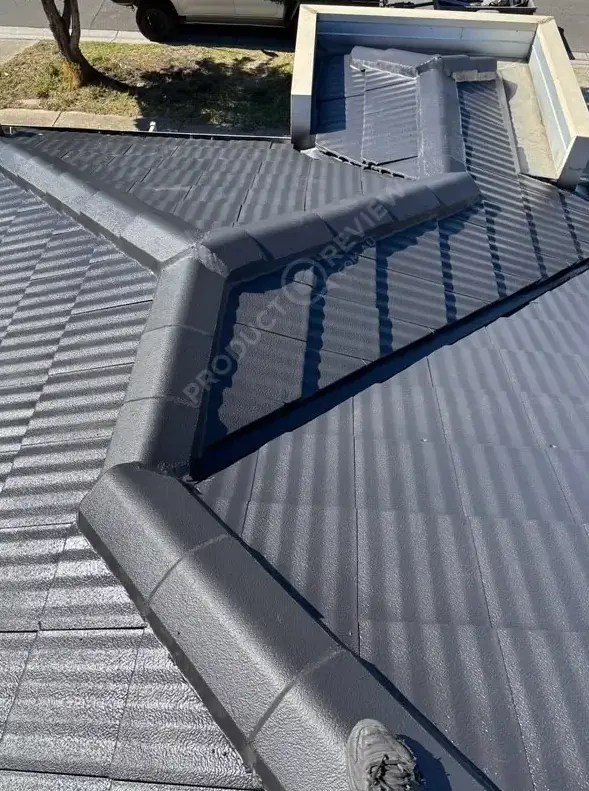
From a visual perspective, ridge and hip lines should look orderly and deliberate. The capping pieces should form a consistent line, and the pointing should not present as large irregular lumps or obvious gaps. Roof shapes with intersecting hips and ridges require particular care because several lines meet in a small area.
The close customer view below shows the completed junctions and allows the finished texture to be examined in daylight. A photograph still cannot verify the condition beneath the capping, but neat surface work combined with a documented repair scope provides far more confidence than appearance alone.
4. Cleaning and preparation determine how the finish performs
Roof coatings rely on the surface beneath them. Dirt, moss, lichen, chalking material and loose previous coatings can prevent a new system from bonding correctly. Pressure cleaning is therefore a preparation stage, not simply a cosmetic wash. The objective is to create a sound, suitably clean surface for the agreed products.
After cleaning, the roof should be allowed to dry and be reassessed. Cleaning can reveal cracked tiles, porous areas or weak previous coatings that were not obvious initially. Required repairs should be completed, and surrounding surfaces should be protected from overspray and run-off during the coating process.
Different materials require different preparation. Concrete tiles, terracotta tiles and metal roofing cannot automatically receive the same process. Our tile roof restoration service considers the roof material, surface condition and any previous coating before recommending a system. Homeowners with corrugated roofing can see two genuine results in our guide to restoring a rusted tin or metal roof.
5. Roof painting and roof restoration are not identical
The terms roof painting and roof restoration are sometimes used interchangeably, but they should not describe the same scope. Professional roof painting focuses on the preparation and coating system. A restoration usually includes a broader assessment and an agreed set of repairs before coating.
A roof may look faded but need only targeted repairs and a suitable coating process. Another roof may require substantial ridge work, broken-tile replacement and attention to flashings before painting is considered. The correct scope depends on the roof—not on a standard package.
When comparing quotes, ask each contractor to identify which repairs are included and which are excluded. A lower price may represent a genuinely simpler roof, but it may also omit work that another contractor considers necessary. Clear scopes make that difference visible.
6. Colour is important, but it is not proof of workmanship
A modern charcoal or grey finish can transform the appearance of a home, particularly when it complements gutters, fascia, brickwork and neighbouring rooflines. The real customer images show why darker neutral colours remain popular across Melbourne: the completed roof appears clean, contemporary and consistent from multiple viewpoints.
Colour selection should still come after the technical assessment. The roof needs to be suitable for the proposed system, and practical factors such as tile type, existing coatings and product compatibility matter more than choosing a fashionable shade. Homeowners should also confirm the final product colour using the manufacturer’s current samples rather than relying only on a phone screen.
The true quality of the job is found in the complete process—repairs, preparation, application and final checks. Colour is the visible conclusion, not the whole restoration.
7. Valleys, flashings and drainage details still matter
The large roof planes attract the most attention in finished photographs, but water is managed at the junctions. Valleys, flashings, gutters and penetrations direct rain away from the building and should be considered during the inspection. Painting around a defect does not repair it.
Ask whether the quote includes inspection of accessible valleys and flashings, replacement of visibly broken tiles and attention to penetrations within the agreed work area. If separate roof repairs are recommended, they should be explained before coating begins wherever practical.
A restoration contractor cannot guarantee hidden parts of the roof that are outside the inspection or scope, so clear documentation matters. The goal is not vague promises; it is a transparent description of what was inspected, what will be repaired and what remains excluded.
8. The final inspection should cover more than appearance
Once the coating has cured sufficiently, the completed roof should be checked against the agreed scope. The inspection should consider overall coverage, ridge and hip work, repaired areas, roof penetrations and whether the surrounding property has been left clean. Ground-level views are useful, but safe on-roof access may reveal details that cannot be seen from the driveway.
Homeowners can also compare the finished work with the quotation and retain product or warranty documents provided for the project. Photographs taken before, during and after the work create a helpful record—especially for roof sections that are difficult to see from the ground.
A professional handover should leave you knowing what was completed, any limitations that remain and what maintenance is recommended. You can view more completed examples in our Melbourne roof transformation gallery.
- ✓Check the completed work against the written scope
- ✓Review the finish from more than one safe viewpoint
- ✓Confirm agreed repairs have been addressed
- ✓Retain product, colour and warranty information
- ✓Ask about future roof and gutter maintenance
9. When restoration may not be the right answer
Not every ageing roof should be restored. Widespread tile failure, severe material deterioration, structural movement or repeated leaks from multiple causes may point toward more substantial work. In other cases, a limited repair may be all that is required and a full restoration would be unnecessary.
An honest inspection should be capable of producing three different recommendations: targeted repair, restoration or roof replacement. The right answer depends on the condition and serviceability of the roof rather than the service a contractor most wants to sell.
If you receive very different recommendations, ask each contractor to show and explain the defects driving their scope. Photographs, plain-English notes and clearly separated options make it easier to reach an informed decision.
10. Questions to ask before accepting a roof restoration quote
A good quote should help you understand the process without requiring roofing knowledge. Before accepting, confirm the roof type, the visible defects identified during inspection, the repair allowance, the preparation stages and the proposed product system. Ask how unexpected defects will be handled if they become visible after cleaning.
It is also sensible to confirm insurance, safe access arrangements, how nearby surfaces will be protected and what is included in the clean-up. Review platforms can help you understand communication and consistency across previous jobs, but they should be considered alongside the written scope and your direct experience with the contractor.
- ✓What visible defects were identified during the inspection?
- ✓Exactly which repairs are included in the quoted price?
- ✓How will the roof be cleaned and prepared?
- ✓Which primer, sealer and coating system is proposed?
- ✓How will gutters, walls, solar panels and neighbouring property be protected?
- ✓What happens if additional damage is found after cleaning?
- ✓What documentation and warranty information will be supplied?
Start with the condition of your own roof
Real completed-job photographs are valuable because they show the standard of finish a contractor has achieved on an actual home. The customer images in this article demonstrate a clean, consistent charcoal result with clearly defined tile rows and carefully presented ridge and hip lines. They are useful reference points—but your roof still needs its own assessment.
Roof Makeover Specialist provides free roof inspections across Melbourne. We assess accessible areas, explain the visible condition and provide a written recommendation for repair, restoration or replacement. Call 1300 ASK 4 US or use the form below to arrange an inspection.
Common questions
Roof Restoration FAQs
How can I tell if a roof restoration has been completed properly?+
Look for consistent coating coverage, clearly defined tile profiles, orderly ridge and hip lines, clean surrounding surfaces and completion of the repairs listed in the written scope. A final inspection and supporting photographs are more useful than judging colour from the street alone.
Should ridge capping be repaired before roof painting?+
Deteriorated ridge bedding or pointing should be assessed and any agreed repairs completed before the final coating. The required work depends on the condition of the existing ridge system and should be documented in the quote.
Does every tiled roof need a primer or sealer?+
Product requirements depend on the tile material, porosity, previous coatings and surface condition. The contractor should nominate a compatible system rather than assume every tiled roof receives exactly the same products.
Can an old tiled roof always be restored?+
No. Restoration is appropriate only when the roofing material and overall roof system remain serviceable enough for the proposed repairs and preparation. Widespread failure or structural issues may make replacement the more dependable option.
How long should a professional roof restoration take?+
Timing varies with roof size, access, weather, drying time and the amount of repair work required. A contractor should explain the expected sequence and allow enough time for preparation and product application rather than promise the same schedule for every roof.